
WXQ1A71P8283 Drive Failure: Immediate Safety Steps and Recovery Boundaries
Published 2026-09-24 | JiWang Data Recovery Technical Team
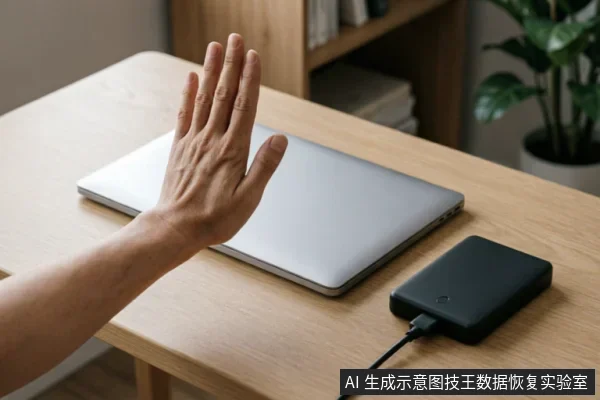
Initial Assessment and Safe Handling Protocols
- Check system logs for connection errors.
- Confirm backup integrity before proceeding.
If the storage device exhibits abnormal mechanical sounds, repeated disconnects, or abnormal recognized capacity, stop repeated power-on and long-term scanning. If completely unrecognized, verify the external connection chain first before deciding whether to enter a read-only assessment.
| Symptom | Action |
|---|---|
| Abnormal sounds | Stop power immediately |
| Repeated disconnects | Check cables |
| Unrecognized | Verify connection chain |
Do not open or disassemble the drive;keep the original media protected and seek professional assessment.keep the original media protected and seek professional assessment.
DiskGenius's bad sector repair function may destroy data in the affected areas and is not intended as a data recovery method. This limitation applies specifically to this function and does not imply that all professional recovery operations are impossible.
In summary, prioritize data preservation over immediate access. Do not force operations that might compromise the device state further. Seek professional assistance when hardware anomalies are detected.
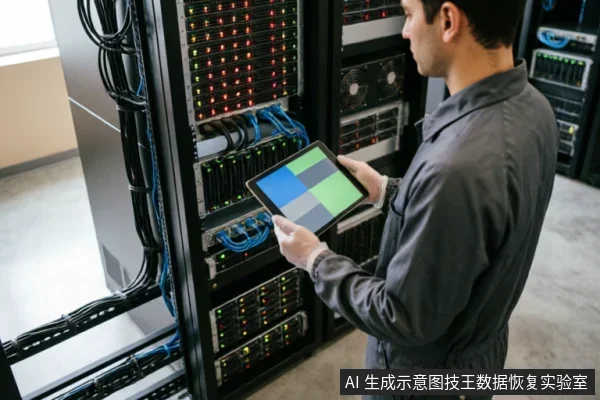
Recognizing Mechanical and Connection Faults
- Verify Device Recognition Status. The initial diagnostic phase requires confirming whether the operating system detects the WXQ1A71P8283 storage device. This step is critical before any further intervention. If the device is not recognized, it indicates a potential connection fault or power issue rather than immediate data loss. Users should check physical connections and cable integrity to ensure stable communication between the host and the drive.
- Check Existing Backups. Before attempting any repair methods, users must verify if secure copies of the target data already exist. This verification helps determine the urgency and risk level of subsequent actions. If backups are present and confirmed secure, the focus shifts to hardware stability rather than immediate data retrieval. This precaution prevents unnecessary operations that could compromise the original medium.
- Avoid Formatting and Initializing. It is strictly prohibited to format or initialize the drive during the diagnosis of mechanical or connection faults. These actions can overwrite critical metadata and render data unrecoverable. Similarly, writing recovery results back to the original medium is forbidden until data security is confirmed. Any attempt to write new data increases the risk of permanent loss.
- Review Previous Operations. Understanding prior interactions with the device aids in identifying the root cause of recognition failures. Recent changes in software configuration or hardware setup may have triggered the current state. Documenting these steps ensures that future troubleshooting remains focused on safe, non-destructive verification methods.
Professional Intervention vs. DIY Risks
When a storage device exhibits abnormal mechanical sounds, repeated disconnects, or abnormal recognized capacity, stop repeated power-on and long-term scanning. These specific symptoms indicate that the internal components are under significant stress or have already suffered critical failure. Continuing to attempt data access in such scenarios often exacerbates the damage, potentially leading to permanent loss of recoverable information. Therefore, immediate cessation of active operations is the primary safety principle. If the device is completely unrecognized by the host system, verify the external connection chain first before deciding whether to enter a read-only assessment. This step ensures that the issue is not merely a loose cable or a faulty port, which can be resolved without invasive procedures. However, if the connection is secure and the device remains undetected, professional intervention becomes necessary. DIY attempts to force recognition or bypass error states carry substantial risks. Unlike software issues, hardware failures require specialized environments and tools that are not available to general users. Attempting to repair physical connections or replace components without proper expertise can cause further destruction. The goal is to preserve the current state of the media for expert analysis. Users should prioritize stability over speed. Any action that increases power cycles or thermal load should be avoided until a professional evaluation is conducted. This approach minimizes the risk of irreversible data loss and ensures that subsequent recovery efforts have the best possible chance of success.
Limitations of Common Repair Tools
| Repair Tool Category | Applicable Scenario | Limitation & Safety Boundary |
|---|---|---|
| Data Recovery Software | Logical file loss or accidental deletion | Do not open or disassemble the drive;keep the original media protected and seek professional assessment.keep the original media protected and seek professional assessment. |
| Command Line Utilities | File system corruption checks | Risk of triggering automatic maintenance routines that may permanently erase data. These tools lack the capability to diagnose internal component integrity and are ineffective for structural issues. |
| Third-Party Diagnostic Suites | Performance monitoring and health status | Provide only surface-level metrics. They cannot repair physical defects or restore corrupted sectors. Continued use on unstable drives may exacerbate data inaccessibility without resolving the root cause. |
| BIOS/UEFI Settings | Drive detection and boot order configuration | Only adjusts system recognition parameters. Does not fix underlying storage media faults. Incorrect adjustments can lead to boot failures, requiring professional intervention to reset configurations safely. |
Application-Specific Recovery Constraints
When dealing with the WXQ1A71P8283 drive, it is crucial to understand that standard diagnostic and repair utilities operate under specific constraints that differ significantly from professional data recovery protocols. A common misconception involves the use of software tools like DiskGenius for addressing storage anomalies. Users often attempt to utilize the bad sector repair function within such applications to restore drive integrity or salvage information. However, this approach carries inherent risks that can compromise the very data one aims to preserve. The bad sector repair function in DiskGenius may destroy data in the affected areas and is not intended as a data recovery method. This limitation applies specifically to this function and does not imply that all professional recovery operations are impossible. This distinction is vital for anyone facing potential data loss scenarios. While the tool might appear capable of fixing logical errors on the disk surface, its primary design focus lies elsewhere. Attempting to force a repair through these means can lead to irreversible data alteration or complete loss in the sectors targeted by the utility. Therefore, relying on such functions for critical data retrieval is ill-advised. Instead, users should recognize that specialized recovery procedures exist which do not carry the same destructive potential. These professional methods are designed to handle complex failure modes without exacerbating the issue. Understanding this boundary helps prevent accidental data destruction during initial troubleshooting phases. It ensures that subsequent actions taken by experts remain viable options. Always prioritize caution when interacting with compromised storage devices to maintain the highest chance of successful outcome.
Frequently Asked Questions
What immediate actions should be taken if the target data is not yet confirmed secure?
First, verify the device recognition status, check for existing backups, and review previous operations. Strictly avoid formatting, initializing, or writing any recovery results back to the original medium.
How should one handle a storage device exhibiting abnormal mechanical sounds, repeated disconnects, or unrecognized capacity?
Stop repeated power-on attempts and long-term scanning immediately. If the device is completely unrecognized, verify the external connection chain first before deciding whether to proceed with a read-only assessment.
Can DiskGenius's bad sector repair function be used as a method for data recovery?
No. This function may destroy data in the affected areas and is not intended for data recovery. This limitation applies specifically to this function and does not imply that all professional recovery operations are impossible.