
Victoria Data Recovery Download: Why No Fixed Price Exists
Published 2026-10-04 | JiWang Data Recovery Technical Team
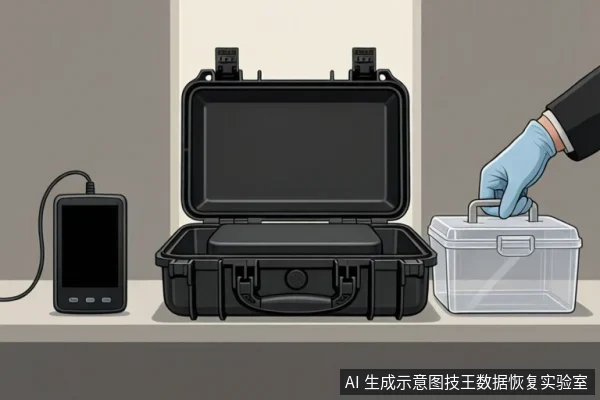
There is no fixed price for a “Victoria data recovery download” because Victoria is a drive diagnostic and repair utility, not a one-click recovery service. A download may help inspect symptoms on a stable, recognized drive, but it does not create a standard recovery fee or guarantee file recovery. If professional recovery is needed, cost depends on logical versus physical failure, media condition, data complexity, RAID/NAS or cleanroom work, and urgency.
What Victoria Can and Cannot Do for a Recovery Decision
Victoria’s role is closest to a diagnostic and repair tool for drives that are still accessible enough to be tested. Its useful output is a symptom picture: whether the drive is detected, whether read behavior is stable, and whether errors appear during controlled access. That picture can help you decide whether a software-based recovery attempt is plausible, but it is not a price quote, a repair certificate, or a recovery result. A download is only the tool; the cost question begins if a professional recovery job is actually required.
This is the first important distinction. A documented fact about the tool is its category: it is not a recovery service. The experience-based part is what any specific drive will need. No responsible lab can convert “Victoria” into a fixed recovery price because the same download can be used on very different failure states, from a healthy drive with deleted files to a drive that is minutes away from permanent mechanical damage.
When a Logical Failure May Cost Less Than a Physical Failure
A logical failure branch usually applies when the drive is recognized, has no abnormal mechanical noise, and the data loss came from deletion, formatting, partition damage, file-system corruption, or a similar software-level event. In that branch, software may be an option, but the safe order matters: stop writing to the drive, avoid installing recovery software onto the affected drive, and work from a read-only image whenever possible. If you can make a stable clone or image, the recovery task may stay in the lower-complexity range because the lab is working with a copy rather than repeatedly touching the original.
Even in this branch, “may cost less” is not a fixed amount. A drive that responds slowly, drops out during imaging, has many bad sectors, or contains a large and fragmented data set can move into a more expensive service tier. The decision point is not whether Victoria can scan; it is whether the original media remains stable enough to image without writing. If scans fail, if the drive disappears, or if its condition worsens, the logical branch ends and the case should be reassessed as a physical-risk case.
When Physical Failure Changes the Cost Branch
A physical failure branch applies when the drive clicks, beeps, does not spin, is not detected after a known drop or liquid exposure, shows PCB damage, or has firmware symptoms that prevent normal initialization. These signs point to hardware, head, motor, platter, PCB, or firmware work. The cost is usually higher because the lab may need cleanroom handling, donor parts, head replacement, firmware repair, or special imaging equipment before any file-system step is possible.
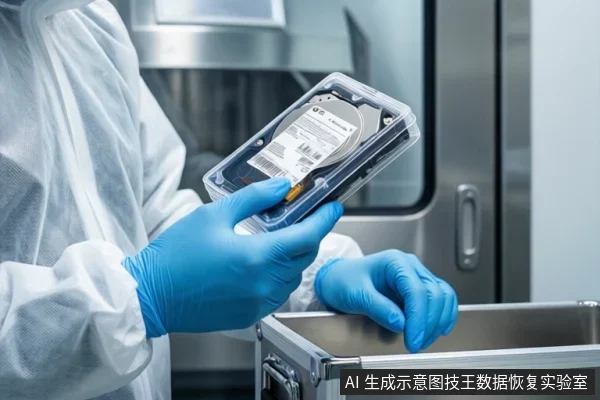
The key difference from the logical branch is that data recovery cannot be quoted from the download alone. The estimate depends on what the evaluation finds: whether the platters are readable, whether the heads can be stabilized, whether a compatible donor exists, and how much imaging must be done before logical reconstruction. A drive with one weak area may require a simpler imaging job; a drive with severe mechanical damage can require chip-level or multiple-stage work. Cost is therefore tied to the recovery procedure, not to the Victoria tool.
Why RAID, NAS, and Complex Data Raise the Estimate
RAID and NAS cases add a second layer of complexity because the file system is distributed across multiple drives, parity blocks, or controller metadata. If one member drive is failing, the remaining drives may still hold enough information for reconstruction, but the lab must preserve each member separately and reconstruct the array in the correct order. Wrong disk order, forced rebuilds, or writes to a degraded array can make the logical damage worse. That is why RAID/NAS recovery often costs more than a single-drive logical case: there are more devices to image, more failure points to control, and more validation work after reconstruction.
Data complexity matters as well. A small set of documents on a single volume is not the same as a large database, virtual machine, mail store, or encrypted container. The cost rises when the lab must rebuild application-level structures, verify file integrity, or handle encrypted volumes. Urgency can also change the service path: rushed work requires scheduling priority and more intensive lab time, but it does not remove the need for evaluation.
Stop Conditions That Apply Before Any Recovery Attempt
If the drive is clicking, not spinning, not detected, or has been dropped or liquid-exposed, stop repeated power-on and software scans. Do not attempt DIY recovery on a drive with those symptoms. The same stop applies if a scan causes the drive to disappear, if it makes repeated abnormal sounds, or if its condition worsens during use. A stable logical problem can sometimes be imaged read-only, but a physically unstable drive should not be exercised just to confirm what Victoria reports. Once those stop conditions appear, the next useful step is professional evaluation, not another download or scan.
How to Get an Evaluation Without Confusing It with a Fixed Price
For a drive that has stopped safely, the service path is evaluation first. Contact SOSIT Data Recovery at 18857148111 for a diagnostic evaluation, and ask whether local drop-off or mail-in handling applies to your location. Free diagnostic evaluation is not the same as free recovery or free repair; any recovery work is quoted after the failure branch and media condition are understood. If the drive is unstable, describe the symptoms without powering it again, and ask the lab whether local drop-off or mail-in handling is appropriate.
Frequently Asked Questions
Is Victoria a free data recovery tool?
Victoria is not a one-click data recovery service; it is a diagnostic and repair utility. Even if the download is free, that does not mean file recovery is free or guaranteed. If the drive has a physical symptom, the recovery task is a lab service, not a software feature.
Why is there no fixed price for “Victoria data recovery”?
There is no fixed price because “Victoria data recovery” is not a single service. A price applies only when a professional recovery task is needed, and that task changes with logical versus physical failure, media condition, data complexity, cleanroom or firmware work, RAID/NAS reconstruction, and urgency. Two drives with the same capacity can require very different procedures.
Can running scans make recovery more expensive?
Yes, scans can make recovery more expensive when the drive is physically unstable. Repeated power-on attempts or software scans can worsen platter or head damage, turning a simpler imaging job into a complex cleanroom or chip-level case. Stop scanning if the drive clicks, stops spinning, disappears, or produces abnormal noise.