
Why External Hard Drive Recovery Costs Vary: Technical Factors and Safe Steps
Published 2026-10-15 | JiWang Data Recovery Technical Team
External hard drive recovery costs are not fixed; they depend on the specific fault type (logical vs. physical), the media type (HDD vs. SSD), and the complexity of data extraction. Logical errors are generally less expensive to address, while physical damage—especially in SSDs involving encryption or TRIM, or HDDs with head damage—significantly increases cost and risk. Users should stop writing to the drive immediately and seek professional read-only diagnostics to get an accurate quote.
Logical vs. Physical Faults: The Primary Cost Driver
The distinction between logical and physical failures is the single biggest factor in determining recovery cost. Logical failures involve the file system, partition table, or boot records, where the data remains intact on the media but the access path is blocked. These issues typically require software-based reconstruction and do not involve hardware disassembly, making them less costly and faster to resolve. Physical failures, such as head crashes, motor failures, or controller damage, require specialized cleanroom environments, replacement parts, and advanced hardware-level intervention. This complexity drives up labor costs and introduces higher risks, resulting in significantly higher prices.
HDD vs. SSD: Media-Specific Technical Challenges
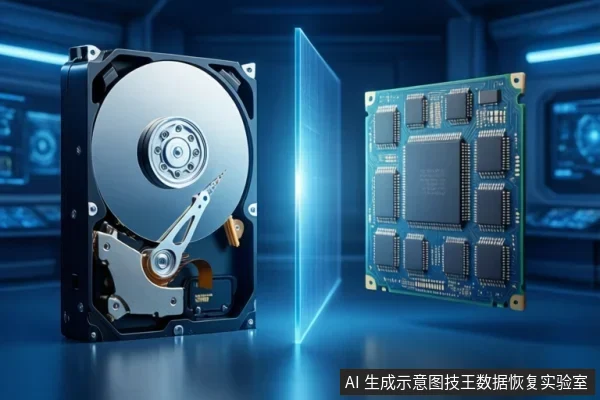
Mechanical Hard Drives (HDDs) and Solid State Drives (SSDs) present different technical challenges that affect pricing. HDD recovery often involves physical repair of heads or platters, which requires precise mechanical work in a dust-free environment. SSD recovery is frequently more complex due to controller encryption and the TRIM mechanism. If TRIM has been executed, data may be permanently erased from the NAND chips, making recovery impossible. Additionally, modern SSDs use full-disk encryption; if the controller fails and the encryption key is lost, the data cannot be decrypted even if the chips are read. These technical barriers often make SSD recovery more expensive and less predictable than HDD recovery.
Safe Initial Steps to Prevent Data Loss
Before seeking professional help, users must take immediate steps to prevent further data loss. First, stop all write operations to the drive. Do not format, run disk repair tools (like CHKDSK), or attempt to copy files, as these actions can overwrite recoverable data. Second, if the drive makes clicking or grinding noises, power it off immediately to prevent physical damage to the heads or platters. Third, check basic connections, such as trying a different USB cable or port, to rule out simple connectivity issues. If the drive is an SSD and TRIM has likely been executed, assess the value of the data before proceeding, as recovery may be impossible. Avoid using 'repair' tools if data recovery is the goal, as they often overwrite data.
Cost Components: Detection, Labor, and Parts
Recovery costs are composed of several key elements. The initial detection fee covers the diagnostic process, where technicians use read-only interfaces to assess the drive's health, read SMART data, and identify the fault type. Labor costs depend on the complexity of the data extraction; simple partition reconstruction is quick, while sector-by-sector imaging and fragment reassembly can take days. For physical failures, the cost of replacement parts (such as heads, motors, or controllers) and the use of cleanroom facilities also contribute to the total price. A professional diagnosis is required to determine the exact work needed, as 'detect first, quote later' is the standard process to avoid misleading fixed-price claims.
Frequently Asked Questions
Why is there no fixed price for hard drive recovery?
Costs vary because logical faults (software-based) are cheaper than physical faults (requiring cleanroom parts and labor). To get an accurate quote, request a written diagnosis report that specifies whether the issue is logical or physical, as this determines the labor and parts involved.
Is SSD recovery more expensive than HDD recovery?
SSD recovery often costs more due to encryption and TRIM risks. Before proceeding, check if the drive was recently used; if TRIM was executed, data may be permanently erased, making recovery impossible regardless of cost.
What should I do immediately if my external drive is inaccessible?
Stop all write operations and power off if you hear clicking. For SSDs, assess TRIM risk before spending on recovery. A professional read-only diagnostic reads SMART data and identifies the fault type without writing to the drive, unlike standard software scans.