
Z1P3EQL5 Storage Device Not Recognized: Safe Troubleshooting Sequence and Stop Conditions
Published 2026-09-24 | JiWang Data Recovery Technical Team
When a storage device identified as Z1P3EQL5 fails to be recognized by the operating system, the immediate priority is to prevent data loss by ceasing all write operations and avoiding repeated power cycling. Since Z1P3EQL5 is not a verified technical specification in our database, it should be treated as an unknown or generic identifier. The safest course of action is to perform basic external connection checks on a different host system using known-good cables and ports. If the device remains undetected, does not exhibit stable enumeration, or shows signs of physical instability such as excessive heat, users must stop all self-service attempts and seek professional evaluation from Jiwang Data Recovery Lab to avoid irreversible damage from potential controller failures.
Diagnostic Table for Symptom Analysis
To accurately determine the next steps, you must first categorize the specific behavior of the Z1P3EQL5 device. The following table outlines how observable symptoms map to risk levels and required actions. This diagnostic approach ensures that you do not apply logical recovery methods to physical hardware failures, which would result in permanent data destruction.
| Observable Symptom | Risk Level | Immediate Action Required |
|---|---|---|
| No response, no lights, no sound upon connection | High (Potential Power/Controller Failure) | Stop immediately. Do not attempt formatting or software scans. |
| Intermittent connection (connects then disconnects repeatedly) | Critical (Physical Instability) | Disconnect immediately. Repeated power cycles cause severe platter or flash degradation. |
| Device detected but shows 0 bytes or requires formatting | Moderate (Logical/File System Error) | Do not format. Cease writes. Professional imaging may be possible if stable. |
| Abnormal noises (clicking, grinding) or excessive heat | Critical (Physical Mechanical/Electronic Failure) | Power off and disconnect. Seek professional cleanroom evaluation. |
Step-by-Step Safe Troubleshooting
If the device does not exhibit any of the critical physical failure signs listed above, you may proceed with a sequence of low-risk external checks. These steps are designed to isolate whether the issue lies with the computer's environment or the storage device itself. Each step must be performed carefully to maintain the integrity of the data.
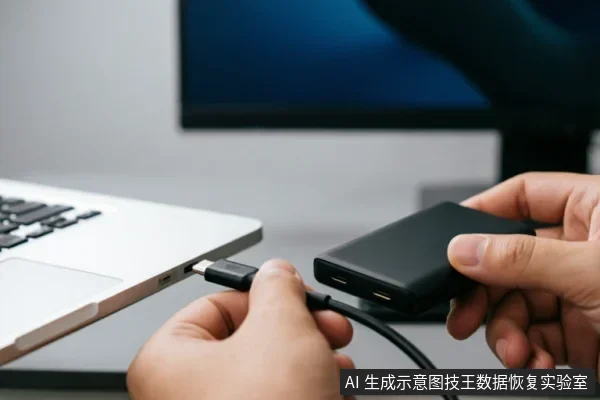
- Swap Cables and Ports: Basic external checks include swapping cables, using different USB ports (preferably rear motherboard ports), and testing on another host system. Front panel USB ports often suffer from voltage drops or oxidation, which can lead to intermittent recognition. Rear ports connect directly to the motherboard and provide more stable power delivery.
- Bypass Hubs and Adapters: If you are using a USB hub, docking station, or adapter cable, remove them and connect the Z1P3EQL5 directly to the computer's native USB port. Hubs can introduce latency and insufficient power, causing the device to drop offline during initialization.
- Check Operating System Indicators: On Windows, open the Device Manager and look for any "Unknown Device" entries or ports with yellow exclamation marks when the device is plugged in. On macOS, check the System Information under USB. If the device appears here but not in File Explorer or Finder, the issue is likely logical rather than physical.
Stop Conditions & Risk Assessment
Understanding when to stop is as important as knowing what to do. Physical signs like heat, noise, or intermittent connection require immediate disconnection and professional evaluation. Continuing to power a failing drive is the single most common cause of total data loss in modern storage media.
- Physical Instability: If the device connects for a few seconds and then drops, or if the connection is unstable, stop immediately. This indicates that the internal components (such as the spindle motor in HDDs or the NAND controllers in SSDs) are failing to maintain synchronization. Every second of unstable power increases the risk of overwriting user data.
- Thermal Issues: If the device becomes excessively hot to the touch within minutes of connection, this suggests a short circuit or component failure. Heat accelerates chemical degradation in electronic components and can warp internal structures. Disconnect the device and allow it to cool completely before considering further assessment.
- Do not open or disassemble the drive;keep the original media protected and seek professional assessment.only a controlled hardware swap in a cleanroom environment can recover the data.
Professional Recovery Pathway
When basic troubleshooting fails and stop conditions are met, the only viable path to data preservation is professional intervention. Jiwang Data Recovery Lab specializes in handling devices where standard software tools are ineffective or dangerous. Our process begins with a thorough physical inspection to identify the root cause without risking further damage. We utilize specialized hardware tools to create a bit-for-bit image of the failing media in a controlled environment, ensuring that the original state is preserved while we work on the copy. This approach allows us to bypass firmware errors, replace damaged PCBs, or recover data from physically degraded platters with minimal stress on the source media.
Frequently Asked Questions
What does the identifier Z1P3EQL5 refer to?
Z1P3EQL5 is not a verified technical specification in our database;treat it as a generic identifier requiring universal safety protocols. It could represent a specific model code from a manufacturer that is not widely documented, or it may be a partial serial number. Because the exact hardware architecture (HDD vs. SSD, interface type, controller chip) is unknown, generic safe-handling principles are the only supported advice. You should verify the full model number on the device label to get more specific guidance.
Can I use data recovery software if my device is not recognized?
No, you should not use data recovery software if the device is not recognized or exhibits unstable connections. Immediate cessation of write operations and avoidance of repeated power cycling is critical to prevent data loss. Software recovery tools typically require the operating system to mount the drive, which involves reading and sometimes writing metadata. If the drive is not recognized, the software cannot access it. If it is intermittently recognized, running a scan can trigger the controller to fail permanently. Wait for professional assessment instead.
How long should I wait before trying again after a failure?
If the device has exhibited physical signs of failure such as overheating or abnormal noises, you should not attempt to power it on again until it has been evaluated by a professional. For minor connectivity issues where the device simply failed to enumerate, waiting a few minutes to allow capacitors to discharge is sufficient before trying a different port. However, if the failure was due to a logical error (like a corrupted file system), repeated attempts to force recognition can worsen the corruption. Base your decision on the symptom analysis table provided above.