
QNAP QuTS MEGA 2.0 snapshots and mirroring for NAS data protection
Published 2026-08-29 | JiWang Data Recovery Technical Team
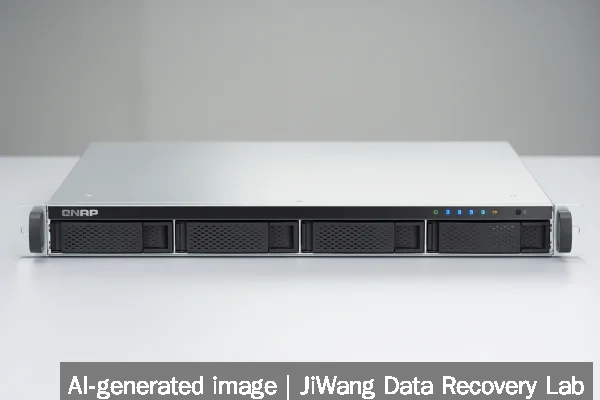
If your QNAP MEGA Scale-out NAS shows unexpected data loss, failed snapshot restoration, or cross-cluster mirroring errors after upgrading to QuTS MEGA 2.0, stop all write operations immediately—including manual file saves, scheduled backups, or RAID resync attempts. Do not force reboot, reinitialize volumes, or run filesystem repair tools like e2fsck or xfs_repair. Verify whether snapshots exist and are intact using the QuTS MEGA GUI *without* triggering restore or overwrite actions. The safest next step is to capture a full system log (via System Settings > Log Center) and preserve the current state of all cluster nodes—then consult a qualified data recovery specialist before any further interaction with the storage layer.
Symptoms and Risk
Users may observe one or more of these behaviors after deploying QuTS MEGA 2.0: missing or corrupted snapshots in the Snapshot Manager interface; replication status showing “Failed” or “Stuck” in Cross-Cluster Mirroring; inability to mount or browse snapshot-based clones; sudden unavailability of Ceph OSDs across nodes; or inconsistent metadata when querying rados df or ceph -s via CLI. These are not isolated software glitches—they indicate potential divergence between logical state (what the OS reports) and physical state (what underlying block devices actually contain). Because QuTS MEGA relies on Ceph’s distributed object store, inconsistency can propagate silently across clusters, increasing risk of irreversible overwrites during attempted recovery.
Known Facts
QuTS MEGA 2.0 introduces two verified features: local snapshots for CephFS and RBD-backed volumes, and Cross-Cluster Mirroring for asynchronous replication between geographically separate MEGA clusters. Snapshots operate at the Ceph RADOS level—not the filesystem—and depend on consistent journaling and OSD health. Cross-Cluster Mirroring uses Ceph’s built-in rbd-mirror daemon and requires bidirectional network connectivity, matching pool configurations, and compatible Ceph versions (QuTS MEGA 2.0 bundles Ceph Quincy 17.2.x). Neither feature modifies underlying drive firmware or alters SATA/NVMe command sets. The S300 AI Surveillance drives referenced in Toshiba’s retail release and Sandisk’s NAS 600/800 SSD families are supported hardware—but their endurance ratings (e.g., 2,500 TBW for NAS 600) assume standard workload profiles, not sustained snapshot delta writes or mirror replay queues.
Possible Causes
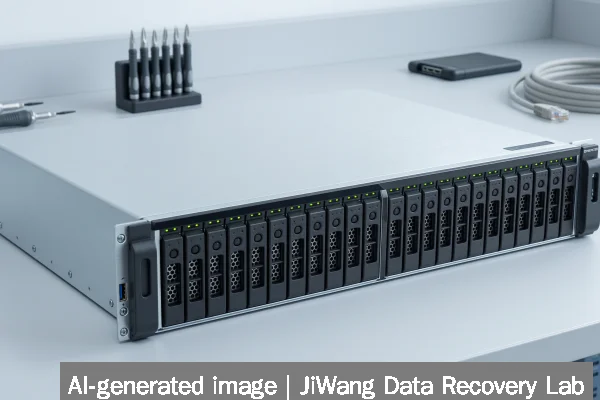
Snapshot failure or mirroring stall may stem from several non-hardware sources: interrupted upgrade processes that leave Ceph metadata in transitional states; mismatched Ceph versions between source and target clusters; insufficient space in the rbd_mirroring pool causing replay queue overflow; clock skew exceeding 1 second across cluster nodes (which breaks Ceph’s Paxos consensus); or misconfigured firewall rules blocking ports 6789 (Ceph monitor) or 6800–7300 (OSD traffic). While drive-level issues like bad sectors or NVMe controller timeouts can contribute, they are rarely the *initial* cause—more often, they appear as secondary symptoms after prolonged mirroring backpressure or snapshot journal corruption. Physical diagnosis is only required if SMART attributes show pre-failure indicators (e.g., reallocated sector count > 0, media wearout indicator
Safe Checks
Perform these checks without altering data: In QuTS MEGA’s Web UI, navigate to Storage & Snapshots > Snapshots to confirm snapshot count, creation time, and status—do not click “Restore” or “Clone.” Use SSH to log into the primary node and run ceph -s to verify cluster health (look for “HEALTH_OK” or “HEALTH_WARN”, never “HEALTH_ERR”). Check mirroring status with rbd mirror pool status {pool-name}. Review logs under System Settings > Log Center, filtering for “rbd-mirror”, “ceph-mgr”, or “snapshotd”. For hardware validation, use smartctl -a /dev/sdX on each drive—only interpret results where SMART overall-health self-assessment test result: PASSED appears verbatim. Avoid running badblocks, dd if=/dev/zero, or any command that writes to device paths.
Actions to Avoid
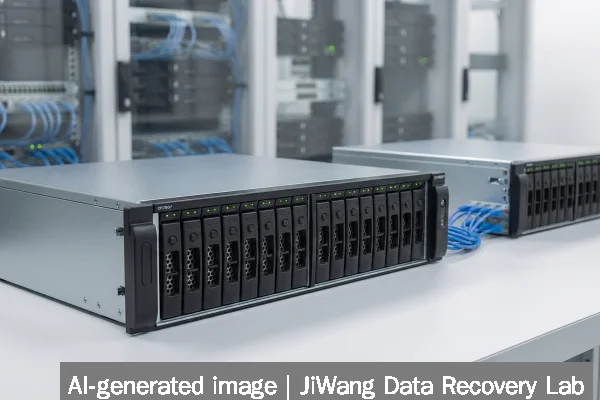
Never initialize, format, or recreate Ceph pools—even if the GUI offers “Repair Pool” options. Do not run ceph osd purge, ceph auth del, or rbd trash purge without first archiving all rbd info output and pool metadata. Avoid restarting the rbd-mirror service mid-failover; this may orphan pending image updates. Never force-stop OSDs using systemctl stop ceph-osd@X unless instructed by official QNAP support documentation referencing your exact firmware version. Refrain from replacing drives based solely on SMART warnings—many S300 AI and NAS 600/800 drives report conservative thresholds that do not reflect imminent failure. Most critically: do not attempt to manually copy snapshot objects from /var/lib/ceph/osd/ directories—their binary layout is not portable and direct access risks journal truncation.
Data-Preservation Workflow
A preservation-first workflow prioritizes immutability: First, disable all automated tasks—snapshot schedules, backup jobs, and mirroring daemons—via the QuTS MEGA GUI. Second, create a read-only forensic image of the boot SSD (if separate) using dd if=/dev/sda of=/path/to/backup.img bs=4M conv=noerror,sync, then disconnect it. Third, for each data drive, use ddrescue -n /dev/sdX /mnt/backup/sdX.img /mnt/backup/sdX.log to capture a sector-level copy *only if* the drive responds to basic I/O and shows no I/O timeout errors. Fourth, archive all Ceph configuration files (/etc/ceph/ceph.conf, /var/lib/ceph/bootstrap-*/*keyring) and pool layouts (rbd ls -l --format json > pools.json). Fifth, retain all logs and screenshots showing snapshot timestamps, OSD map epochs, and ceph -w output before proceeding to analysis.
Frequently Asked Questions
Can I recover files directly from a QuTS MEGA snapshot without restoring the entire volume?
No. QuTS MEGA snapshots are Ceph-native point-in-time references—not browsable filesystem images. They cannot be mounted or accessed like traditional NTFS or APFS snapshots. Recovery requires either full-volume restore (which overwrites live data) or targeted object extraction using rbd export-diff and rbd import-diff—both of which require precise version alignment and carry overwrite risk if misapplied.
Does Cross-Cluster Mirroring protect against ransomware?
Not inherently. If ransomware encrypts files on the primary cluster and those changes replicate before detection, the mirrored cluster will receive encrypted objects. Protection requires air-gapped snapshots or immutable object locks—neither of which QuTS MEGA 2.0 implements natively. Third-party S3-compatible gateways with WORM policies may supplement but do not replace native safeguards.
Are Sandisk NAS 800 PCIe 5.0 SSDs safe for snapshot-heavy workloads?
They meet endurance specs (e.g., 14,900 MB/s reads, 7.68 TB capacity) under sequential loads, but snapshot delta writes generate random 4K I/O patterns that stress NAND wear leveling. Their 14,900 MB/s rating applies only to sustained sequential reads—not mixed random writes typical of Ceph journaling. Monitor smartctl -a for “Media_Wearout_Indicator” and avoid deploying them in OSD roles without verifying vendor-specific endurance guidance for CephFS metadata pools.
What happens if one node fails in a QuTS MEGA cluster during mirroring?
Ceph’s CRUSH map redistributes OSD responsibilities, but cross-cluster mirroring halts until the failed node rejoins *and* its OSDs catch up to the latest epoch. No automatic failover to alternate mirrors occurs—the target cluster remains static until source consistency is reestablished. This is by design, not defect.
Is it safe to downgrade QuTS MEGA after enabling snapshots?
No. Downgrading from 2.0 to earlier versions invalidates snapshot metadata structures and may render volumes unreadable. QNAP explicitly prohibits downgrades in the QuTS MEGA 2.0 release notes. Reversion requires full backup, factory reset, and restore—making snapshot integrity contingent on pre-upgrade verification.